Weight training for beginners in Paphos: getting started at Vigour
Vigour Studio Gym · 8 October 2026
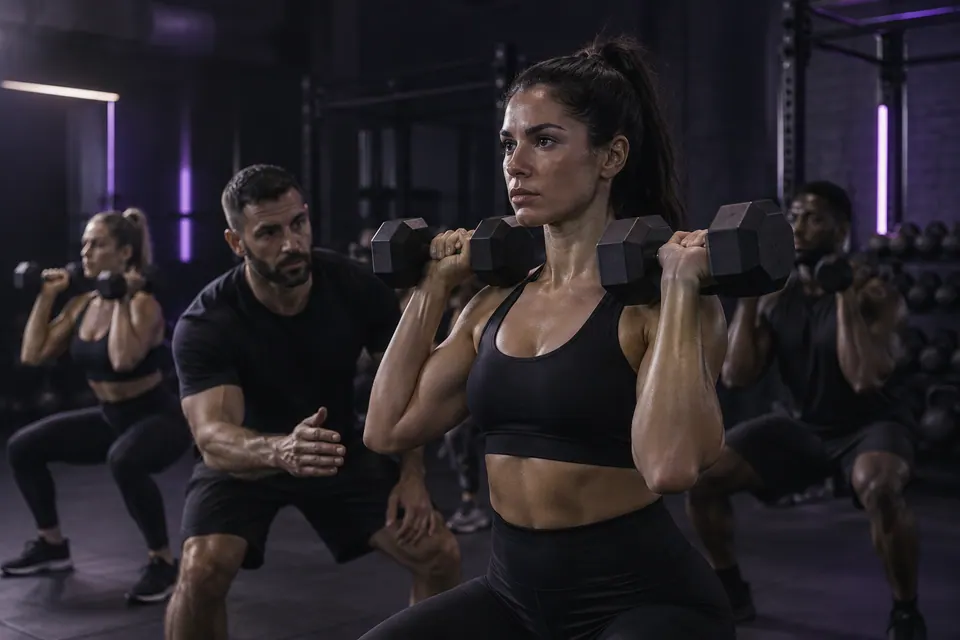
Your first visit to a weights area can raise more questions than it answers. Which machine should you use? How much resistance is appropriate? How do you know whether a movement is being performed correctly? Weight training for beginners becomes easier to understand when it starts with a few clear principles. Vigour Studio Gym in Paphos offers a weights area and equipment, together with individual coaching options.
This guide helps you organise useful questions and establish sensible first habits. It is not an individual exercise prescription and does not promise a particular result. A suitable starting point depends on your experience, health, available time and goal. Learning how to use equipment with control is more useful than comparing your weights with those of another person or trying to make every session feel as hard as possible.
What strength training means
Strength training uses resistance to challenge muscles. That resistance can come from weights, machines, bands or body weight. It is not limited to lifting very heavy loads and is not reserved for athletes. A basic routine may use different forms of resistance, depending on the movements you are learning and the equipment you can handle comfortably. The choice should have a clear purpose in your programme.
The World Health Organization's general guidance for adults includes muscle-strengthening activity involving major muscle groups on at least two days a week, alongside aerobic activity. This is population guidance rather than your personal programme. It does not determine your exercise selection, session length or appropriate intensity. Those details need adjustment to your circumstances, particularly when you have a known health restriction or relevant medical advice. Source: WHO
Start with setup and technique
Before using a machine, make sure you understand how to adjust the seat, support points and resistance. The setup left by the previous person may not fit you. Ask for a demonstration and practise the movement with an appropriate load. Your first task is to understand where to position yourself and how the equipment moves, rather than immediately making the exercise more demanding.
With free weights, pay attention to your starting position, the space around you and how the exercise begins and ends. Carrying and putting down a weight safely are part of the session. Keep dumbbells and plates out of walkways. Avoid trying to rescue an awkward position while holding a load you cannot control. Ask the trainer how to organise each stage of the movement.
Machines or free weights?
You do not need to choose a permanent side. Machines often constrain the movement path, while free weights require a different kind of organisation and control. Both can have a role, but neither is automatically suitable for every person or exercise. What matters is understanding why an option was selected and being able to perform the movement appropriately with the guidance available.
For a beginner, a useful question is: “Which version will help me learn this movement?” If an option creates considerable uncertainty, a simpler variation may be a better starting point. A machine still requires correct setup and attention. Coaching helps you compare choices against your needs, rather than choosing equipment because it looks more impressive or because a more experienced person happens to use it.
Choosing an initial load
The initial resistance should allow controlled execution and an understanding of the exercise. Your first visit does not need to reveal the maximum weight you can lift. If the rhythm changes substantially, your position becomes uncontrolled or you need unrelated movements to finish a repetition, reconsider the load. Ask your trainer for a clear criterion for what an appropriate effort should look and feel like.
Increasing resistance is one way to progress, but it is not the only one. You might first work on consistency, control across repetitions or familiarity with the movement. Changing several variables together makes it harder to understand what worked. A simple record helps maintain continuity between sessions without making every set an attempt at a personal record. Note adjustments as well as the weight used.
Organise training and recovery together
A beginner's programme needs a clear sequence and enough time to learn the main movements. Discuss the warm-up, rest periods and how the session will finish. Avoid adding exercises simply because there is spare time or because you fear you have not done enough. Total effort should reflect the programme and your response, rather than an arbitrary list of everything available in the gym.
Recovery also concerns the organisation of your week. If you combine weights with HIIT, Circuit or another demanding class, tell your trainer about all of your activities. Different sessions can place demands on similar muscle groups. Sleep, breaks and practical availability influence what you can maintain. A routine that works for someone with different commitments may not be a useful starting point for your own life.
Common early mistakes
One common mistake is changing programmes constantly. Without repeating basic movements, it becomes difficult to learn them and compare your experience over time. Another is treating exhaustion or soreness as the only sign of a successful workout. A session can be useful without leaving you drained. Movement quality, understanding and consistent attendance deserve attention alongside any performance numbers you choose to record.
Do not ignore pain to complete an exercise. Sharp pain, dizziness or unusual discomfort are reasons to stop and inform the responsible trainer. Persistent symptoms require appropriate healthcare assessment. Also avoid borrowing unverified instructions from other participants: their exercise, setup or progression may not suit you. Asking for clarification is a normal part of learning and is preferable to guessing while handling resistance.
Frequently asked questions
Do I need personal training to begin?
Individual coaching is an option when you want more help with technique and organisation. Ask Vigour what support is available and describe your experience. The essential point is to understand the equipment and the programme you are following, rather than improvising with movements you do not know. Confirm the arrangements and availability directly with the studio.
Will I see changes within a fixed number of weeks?
The same timeline cannot be promised to everyone. Record attendance, movement quality and confidence, then discuss progress regularly. Your initial goal may need adjustment as you learn. Strength training is a process of practice and repetition, rather than a race against another person or a guarantee of a particular appearance by a particular date.
Where can I learn more in Paphos?
Contact Vigour Studio Gym for information about the weights area and personal training. Explore the classes and timetable if you want to discuss combining activities. A clear conversation about your goal, experience and available hours can help you begin with a plan that is easier to understand and more realistic to maintain.